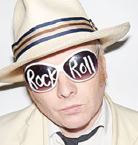
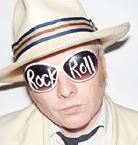
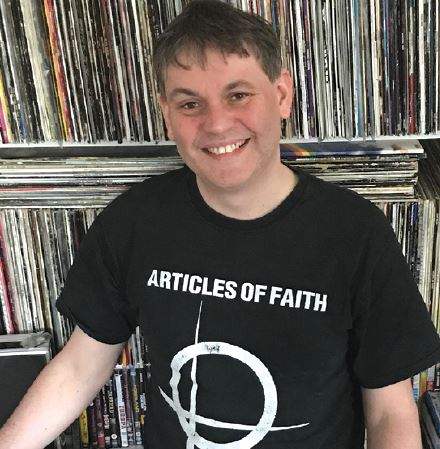
His hair is now quite white and the lines on his face reveal that his 67 years on this planet haven’t been quiet ones. Yet Eric Burdon still looks distinctly like Eric Burdon.
One of the most charismatic figures to leap from the TV screen during the 60s beat boom, Burdon’s subsequent ventures, however successful, have always been measured – in Britain anyway – against his achievements with The Animals, whose career suffered more than most from the discords that make pop groups what they are. In 1966 they quit while they were ahead, with their Don’t Bring Me Down ensconced in Top 20s all around the world. Eric then fronted a New Animals, but the old bunch reassembled periodically, most conspicuously for a world tour in 1983, 14 years before drummer John Steel and guitarist Hilton Valentine became mainstays of an Animals targeted for the nostalgia trail.
Today, Steel is the only member of the original Tyneside outfit performing in this incarnation, while Valentine plays in a US-based outfit led by Burdon.
Visiting London from his California home recently to undertake a reunion concert at the Royal Albert Hall with War – with whom he joined forces in the early 1970s for three albums that included the US No 1 single, Spill The Wine – Burdon was also over to promote his new solo offering, Soul Of A Man, a passionate exercise in modern blues, in which he demonstrates that a sandpapery quiver during a dragged-out note can still be as loaded as his most anguished roar.
In the refectory of his Kensington hotel, Eric, a most game and articulate interviewee, was happy to discuss more than the War show and Soul Of A Man. While trying to avoid the more familiar aspects of a story told in his two autobiographies – I Used To Be An Animal But I’m Alright Now (Faber & Faber, 1986) and Don’t Let Me Be Misunderstood (Thunder’s Mouth, 2001) – he spoke of art, politics, singing, sex, drugs, fame – and some of the myths and legends of a life less ordinary.
In Sean Egan’s history of the group, Animal Tracks (Helter Skelter, 2001), John Steel reckons that, from the beginning, you sang from the throat rather than the diaphragm – which is technically wrong. Andrea Bocelli would have a fit. What do you do to maintain it?
Absolutely nothing. If I’m on the road, my voice changes – and I just go with it. I once complained to Maggie Bell that I had a cold coming on and had a string of dates in Germany the following week – and she advised me not to worry about it, just groove behind whatever sound comes out. It seems simplistic, but I never forgot what she told me. I met an opera singer like Andrea Bocelli one time, who told me that there were exercises you could do without going (sings) doh ray mee fah soh la ti doh over and over again in your dressing room. You don’t have to utter a sound, just massage the voice box. I use that technique when I’m in dire straits. My main problem is that I’ve been an asthmatic since I was six, probably because of Newcastle’s pollution.
The great thing, however, is I can go on stage and give what appears to be an athletic event for two hours, but it’s just a case of my brain being aware of what I am capable of. However, if I saw somebody drowning in a swimming pool a hundred yards away and I had to jump in and rescue them, that’d bring on the asthma. It’d put me in hospital – because it’d be something my brain wasn’t ready for. It’s the same if I rush into the ocean and crash into rough waves – though one of the best things you can do for asthma is to swim.
Did your voice develop the way it did through listening to black music?
Yes. When I was a kid I worshipped Ray Charles, Joe Turner, Jimmy Witherspoon, Billie Holliday… Their voices would send me into a sort of erotic dream state. There was something particularly sexy about the tone and quality of Billie Holliday. You could hear that she’d had a tough life, and that she was a tough woman with a genteel voice. It was the same with Edith Piaf, a tiny little girl, born on the streets – but when she opens her mouth, she commands you to listen.
When I started singing in the clubs, I would take, say, a Ray Charles song and do it the way Joe Turner would – or take a Joe Turner number and do it like Jimmy Witherspoon. Out of that mixture came me.
When Alexis Korner & Blues Incorporated founded that basement club in Ealing – seen now as a shrine of British blues – did you hitchhike down from Tyneside for sessions there?
Every summer holiday I hitchhiked to Paris, and when I came through London, I made friends with Alexis. A particular memory of that period was having tickets for the Antibes Jazz Festival to see Ray Charles, but hanging around with Alexis at his house and at the Ealing club made me late, and when I got to Antibes, Ray had been and gone. Then I headed for Paris where I met these kids, and they pointed me in the direction of a club where he was appearing the very next night – so I got to hear him up close and personal. To me, Paris was more of a taste of what I’d get if I ever made it to America. It had the heat in the summer, the Left Bank, all the runaway American jazzers who had drug problems. I once stood in a back alley and watched Chet Baker shoot up heroin. That side of Paris was for real. It was dangerous.
This is sort of connected. I watched a documentary about Keith Moon, and I saw a lot of him in me. I understood what spurred him on to be as outrageous as he could be. It’s a spirit within you that needs to exorcise itself – and a way of doing that is through drugs. One of my principal motivations for making an exhibition of myself in a pop group was sex. Yes, me too. It was the fastest way to get women. Those individuals that became The Animals would go into a garage with cheap amplifiers and a rotten old drum kit, and start playing. Next thing you knew, there were six or seven young student girls with their duffle coats on, standing outside.
You always struck me as being as much of a rock’n’roller as a blues man, especially when you unbuttoned your jacket on Ready Steady Go! to reveal “ROCK’N’ROLL LIVES!” scrawled in cardboard across your front.
Yes, I always stood by rock’n’roll. When we were on tour with Chuck Berry in 1964, I remember telling him that he was as much of a bluesman as Muddy Waters, but he insisted he was a writer of rock’n’roll songs for white people. I said I didn’t care, because of the Stones, The Beatles and all the other British beat groups that more or less owed their careers to him.
One night in the Paramount Theatre in New York, The Animals got pretty loose, and I announced that we were going to finish with a blues jam, New York City Blues. I counted it in, Alan started to play, Hilton crept in and, to our great surprise, Chuck Berry walked on from the wings and plugged in.
When I was at school, The Animals were on as unreachable a plateau to me as the old rock’n’rollers and blues musicians were to you at the same age.
That’s how it is before you’re introduced to the real person with all his vulnerabilities. After I met Jimi Hendrix, as far out as he was, I realised that there were certain topics of conversation that he couldn’t handle. I’d say that I believe in God but, first of all, He’s a woman, and secondly, He’s black. Statements like that would shock him. In his final note that I found by his bedside the morning after he died, he ruminated about Jesus, reflecting on the way that he’d been brought up.
Myth has it that, when you were young, blues was like a religion to you, so much so that you ritually inked the word “BLUES “ in your own blood across the cover of an exercise book in which you’d compiled lyrics.
I was 17 when I did that. I loaned that book to Nina Simone. She had it for four or five years before returning it, but it was stolen when I left it backstage somewhere.
It’ll probably be auctioned at Sotheby’s one day. How did your parents feel about the way you were growing up?
Though there was a little resistance at the beginning, they were very supportive. They put me through art school where, for four years, I did nothing but fool around.
It’s fascinating how many important acts from every phase of British pop had roots in art schools. The Stones, The Yardbirds, The Kinks, The Pretty Things, The Bonzo Dog Doo-Dah Band, Roxy Music, Sex Pistols, Ian Dury…
That’s because they sell you the dream that you’re there to become an artist, and then they break you down into specialist areas – ceramics, technical drawing and so forth. Eventually, I was offered a very well-paid job in a glass factory in Lancashire, but I realised that it meant being stuck in a copywriting office and that’s not what I wanted at all. I’d come to specialise in exhibition design, involving plastics, glass, metals, photography and constructing the stands. It was the nearest I could get to being a film production designer because there was nowhere in Britain where you could get training in that field. Nevertheless, I got to travel to events like the 1958 World’s Fair in Brussels. There were all kinds of cutting-edge stuff there that was beyond me…
Something else that was interesting about my time at the art school was being in its trad jazz band – which was the start of music at the college that was to involve Bryan Ferry and Sting in subsequent years.
Didn’t you play trombone? Were you any good?
Yes, I was OK. We were fanatics about the purity of trad. During the clarinet solo, for instance, the drummer had to play wooden blocks – and if you called it “dixieland” you’d get lynched. Yet out of it came Lonnie Donegan and skiffle and the British blues movement.
On the subject of blues, I was half-expecting Soul Of A Man to be like Guilty!, the one you did with Jimmy Witherspoon in 1971 – because that was being promoted as a blues collection too. But what’s more intriguing is that though you didn’t compose any of the Soul Of A Man tracks, you make them sound as if you did…
At the beginning of the project in summer 2005, my producer Tony Braunagel and I found ourselves glued to the television, watching with horror and dismay at the effect of Hurricane Katrina on New Orleans, and me visualising the end of a dream – that I’d probably never go back there because the greatest enemy of an asthmatic is mould and mildew. I was also disgusted at the poor response to the disaster by such a wealthy country.
So we started to dig into blues catalogues for material that would be a kind of homage to the survivors – and to the way of life in the Deep South. Although I didn’t pen them, every song has a direct connection with me, even Slow Moving Train about the Robert Kennedy assassination, because I was with Memphis Slim in a Parisian bar when the news came through. Also, I was living in Beverley Hills, just up the street from the hotel where it happened – and the police yellow tape was still round the building when I returned from France. We’re hoping to make a documentary video to go with that track – as an acknowledgement of the passing of Robert Kennedy and his ideals.
That brings me to your film career…
I’m a very visual person, and I love movies as much as I hate them. Many an interviewer has left me with the idea that I wanted to be a director when I’m just a lowly singer. I’m talking about when I was in my 30s, and known as a rock star in most places. You couldn’t just suddenly decide to be a movie director. You had to attend classes, get degrees… you had to be in the club. The closest I ever came to greatness in film was when Ridley Scott gave me total freedom to be on the set of Blade Runner. He was from Newcastle, and had gone to the same college as me. To see a Geordie in Hollywood in charge of a union shoot, and making one of the greatest science fiction movies ever told me, ‘Yes, I could do it too!’
I was thinking more of your acting actually.
I’ve done film acting, but I can’t say I was 100% satisfied with anything apart from one movie I did in Germany – with my lines overdubbed – in 1999 called Snowfall On New Year’s Eve, which didn’t go anywhere. I played a guy in love with an attractive blonde who spurns him, so he builds a high-powered rifle with a telescopic sight. He flies across the sky in a balloon on New Year’s Eve and shoots her. This is woven into other sub-plots centred round a DJ playing telephoned requests, and I’m one of the callers. It’s a wonderful movie, but it was shown on German TV just once. I’ve also made a Greek movie, three more in German and a TV drama in the States, playing a pimp. It was based on the true story of a murder, but an injunction was slapped on it because the trial of the two killers was still going on. These experiences taught me a lot about cinema, the gamble that one takes in taking on a movie, and the vast range of talent involved.
I’m reminded of Frank Zappa calling you “the Charlton Heston of rock”.
That was during the making of his movie, 200 Motels. I wasn’t involved with that because I was on the road. That’s often been the case when such opportunities arise. I got into trouble because I wasn’t at the New York Astoria when The Animals were inducted into the Rock’n’Roll Hall Of Fame in 1994. I was in Germany, doing my job. Nobody appeared to remember me being there on many other occasions – like at the first ever such event which took place before the place was even built – or when I sat in with Animals II when we were celebrating the original group earning a star on the Hollywood Walk Of Fame.
Certain press organs implied that you weren’t at the Astoria because you ‘weren’t speaking’ to the other surviving Animals. Backtracking to your reunion tour in 1983, there was that headline in The Sun: “WHY I DESPISE ALAN PRICE – BY ERIC BURDON”. You also mention “how angry we all still are over his keeping all the House Of The Rising Sun money” in Don’t Let Me Be Misunderstood.
If I have any negative feelings about Mister Price, I will cope with them. By the way, he had a chance to be a movie star too. Imagine someone handing you the sequel to Alfie on a platter as he was. Yet he blew it. I was talking to Malcolm McDowell only recently, and he felt that the fault lay in Alan not taking elocution lessons and changing his accent, and not removing this expensive watch he was wearing when he was supposed to be a truck driver.
The House Of The Rising Sun money doesn’t interest me. We started out as a Geordie band, representing Newcastle, but within the space of the first year, it wasn’t the band that I signed on for. I wanted out. In any case, there were new political horizons. For the first time, Britain wasn’t engaged in any war. It was too tame for me. Perhaps I’m guilty of getting off on other people’s conflicts but, by 1968, I was everywhere – on the barricades in Paris, among the student protesters at Berkeley, doing gigs in San Francisco in the thick of big changes from love and peace to everything going dark when 1968 dropped like an iron curtain. I thrive on that kind of stuff.
Around that time you were writing like a journalist, reflecting what was going on in songs like Sky Pilot and White Houses.
Maybe journalism is what I’d have liked to have done. Instead, I chose gigs. It put me at the tail end of the war in Sarajevo and I played in Israel during the 1983 reunion tour. When the rest of The Animals left, I stayed there, travelling the length of the country and into Jordan in a jeep. That was what I got into rock’n’roll for – to be in places like that or upstate in Harlem when the riots were going on.
Is there really going to be peace ever? I don’t think so, but we can dream about it, talk about it, make music about it. When I was offered these shows with War again, I thought, wow, this is a great opportunity to speak about the two things that bug me constantly: race and warfare.
In the beginning, was the idea that you – famous already – were to front War to help get them off the runway?
It was a bit like that. I was also discovering that young blacks in America didn’t necessarily like blues – because it had been appropriated by white boys. It now belonged to the likes of Alexis Korner, Eric Clapton and myself. That’s how War – or Night Shift as they were then – came about. Now lots of young black kids are stepping up to the plate and realising what blues really meant.
War and I came together during Vietnam, a conscripted war in which my friends would be sent off to the hell of the jungles. It took years for that war to grind down because Richard Nixon kept it going. On the home front, I was affected because Mike Curb, the boss of MGM – to whom I was then signed – was governor of California, and he told Nixon that he was going to get rid of every MGM artist who’d mentioned on disc anything to do with drugs…
Except you! A lot of War’s “message” songs were your work…
I see songs as plays. I’m primarily a lyricist, very influenced by books. I’ve just read several about the situation in Iraq, and am currently engrossed in George Orwell’s Homage To Catalonia. Books like these teach me that the present generation in America – the press call it “Generation Kill” – is not the same as that which fought in Vietnam, when there was rebellion within the militia itself about the war. That’s not likely to happen with Iraq. Joni Mitchell commented in a recent interview that we didn’t fight hard enough for peace in the 60s. The Black Panthers tried an armed revolt, but the powers-that-be overcame them. Although every US citizen has the right to bear arms, as soon as you walk into the street with a small pistol, you’ll be arrested.
Don’t you think it made a difference that folk such as yourself who had easy access to mind-bending drugs from the later 60s are now in positions of influence?
If the moods in my head had kept on changing, I’ll still be taking acid today, but it got to the point where it could only produce so much information. Yet I treasure the visions that I had, even the nightmares. I was convinced that if I could live through those acid trips, good and bad, there would be nothing in this world that could ever make me afraid again.
You were fortunate. A lot of people went on acid trips and never came back.
It had to come out of the bottle somehow. Albert Hofmann, the guy who first synthesised it in Sandoz, is 102 years of age now (He died a few days after this interview – Ed) and he’s still probably taking it! Doesn’t that tell you something? I was invited to his 100th birthday party, but I couldn’t attend because, once again, I was working.
LSD has always been a mystery for me, but I can see why American Indians of old and people in indigenous tribes in South America take psychedelics. Also, the basic opinion of the American Indian about the white man is that he drinks alcohol, talks about God, and rams Him down people’s throats – whereas they take magic mushrooms and talk to God, who talks back to you in a personal way. It opened my mind to the fact that there have been more wars and more deaths over organised religion than anything else in the history of mankind. World War II was a religious war because Adolf Hitler knew that he could take the Cross and bend it into a swastika.
Thanks to Dorothy Howe and Marianna Proestou.